
Meghalaya Reports Highest HIV Caseload in India
Meghalaya’s Health Minister informed the Assembly that more than 10,000 people are receiving antiretroviral therapy, as national and regional initiatives aim to control HIV across Northeast India by 2027.
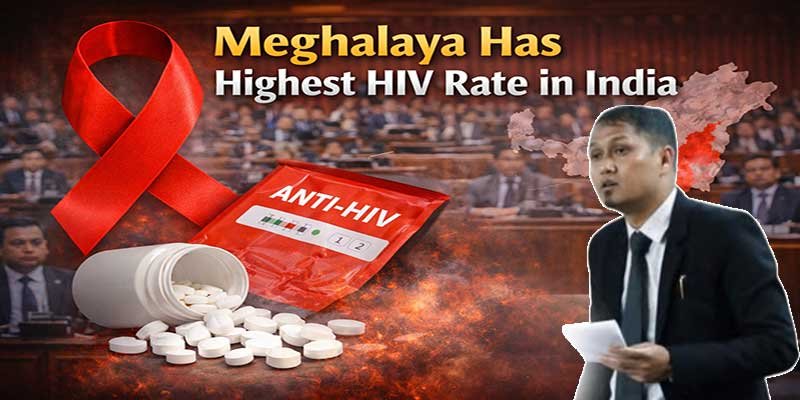
SHILLONG- The Health Minister of Meghalaya informed the state assembly that the northeastern state currently has the highest HIV caseload in the country, with more than 10,000 people receiving antiretroviral therapy (ART), raising fresh concerns over public health challenges in the region.

Responding to queries from legislators, Health Minister Wailadmiki Shylla said that around 10,293 individuals living with HIV are currently on treatment under the state’s healthcare programmes. He noted that the government has approved a ₹25-crore, five-year intervention plan aimed at strengthening awareness, testing infrastructure and treatment support to address the “alarming rise” of HIV cases.
Also Read- Mizoram: Heroin Worth ₹9.18 Lakh Destroyed in Lunglei
According to the minister, social stigma and legal confidentiality provisions continue to pose significant barriers to early detection and treatment. He explained that HIV testing requires consent and strict privacy safeguards, which sometimes discourage individuals from coming forward for screening and care.


The update comes amid broader national efforts to control HIV in 60 districts across the Northeast by December 2027 under initiatives such as Mission AIDS Suraksha. Officials say the programme aims to strengthen community outreach, improve treatment adherence and expand counselling services across high-burden districts.
Also Read- Mizoram Assembly Amends Marriage & Inheritance Law
Health authorities in Meghalaya have also highlighted the role of Integrated Counselling and Testing Centres (ICTCs), with hundreds of facilities and mobile units currently operating across districts to increase access to testing and treatment. Funding support from the National AIDS Control Organisation is being used to expand screening, opioid substitution therapy centres and targeted interventions for high-risk populations.
During the assembly discussion, the minister stressed that HIV is no longer a death sentence and can be effectively managed with sustained treatment. He credited ongoing awareness campaigns and collaboration with community stakeholders for improving treatment uptake, while acknowledging that stigma remains one of the biggest obstacles to controlling the spread of the virus.
Also Read- Manipuri Film ‘Boong’ Wins Historic BAFTA Award
The minister also shared data indicating that most reported deaths over the past decade were linked to opportunistic infections rather than HIV itself, underlining the importance of early diagnosis and consistent medical care.
Public health experts note that Meghalaya’s geographic and social landscape — including dispersed populations and evolving patterns of substance use — has added complexity to HIV prevention efforts. The state government has said that strengthening education, expanding outreach programmes and ensuring community participation will be central to reducing infection rates in the coming years.