
Assam: IAF Begins Trial Runs on Dibrugarh Highway Strip
The Indian Air Force conducts trial runs at an Emergency Landing Facility on a national highway in Dibrugarh, highlighting strategic defence preparedness in the Northeast.
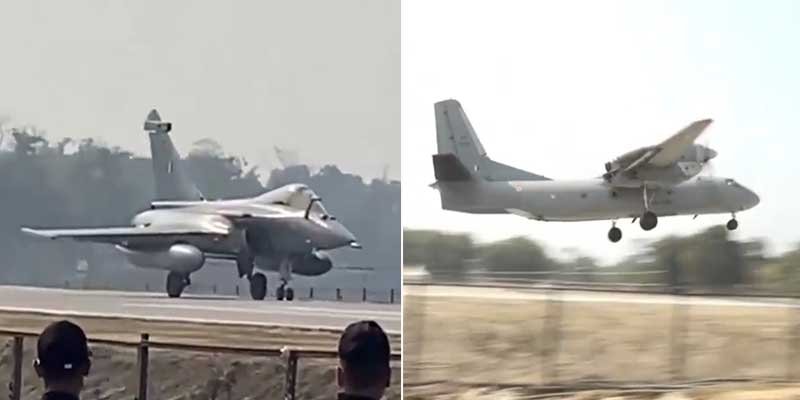
DIBRUGARH- The Indian Air Force (IAF) has begun trial runs at an Emergency Landing Facility (ELF) constructed along a national highway in Assam’s Dibrugarh district, signalling an expansion of strategic defence infrastructure in the Northeast. Officials said the exercise aims to assess operational readiness and the feasibility of using highways as auxiliary airstrips during emergencies.

According to defence sources, the ELF is designed to allow fighter aircraft and transport planes to conduct take-offs and landings in situations where conventional airbases may be unavailable. Trial runs typically include coordination between civil administration, highway authorities, and security agencies to ensure safety and logistical preparedness.
Also Read- Italian Report Fuels New Debate on AI171 Crash Cause
The Northeast region holds strategic importance due to its proximity to international borders and challenging terrain. Analysts note that the development of highway landing strips forms part of a broader effort to enhance rapid response capabilities and maintain operational flexibility. Similar facilities have been tested in other parts of India as part of contingency planning and disaster-response preparedness.


Authorities have not released detailed information about the types of aircraft involved in the Dibrugarh trials. However, defence experts say such exercises usually focus on evaluating runway strength, communication systems, emergency response protocols, and coordination between military and civilian agencies.
Also Read- Vaiphei Women Protest Outside MLA LM Khaute’s Home
Local officials stated that traffic management measures were put in place during the trials to minimise disruption and ensure public safety. While the exercise underscores military preparedness, it also reflects a growing trend toward dual-use infrastructure, where highways are engineered to serve both civilian transport and defence requirements.
Observers view the initiative as part of ongoing efforts to strengthen infrastructure resilience in the Northeast, a region increasingly prioritised for strategic connectivity and security planning. Further assessments are expected before the facility becomes fully operational for regular defence use.