Golden Jubilee of 1000 Drums Wangala Festival Opens in Meghalaya
Chief Minister Conrad K. Sangma inaugurated the Golden Jubilee edition of the festival, themed “Rhythm of 1,000 Drums,” at Chibagre near Tura.
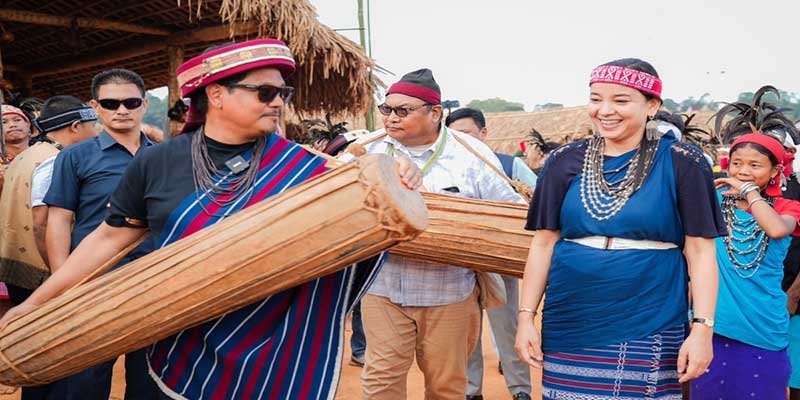
TURA ( Meghalaya )- The Golden Jubilee edition of the iconic 1000 Drums Wangala Festival, one of the most significant cultural celebrations of the Garo community, opened on November 11 at Wangala A’dam in the Garo Heritage Village at Chibagre, near Tura in West Garo Hills.

The four-day post-harvest thanksgiving festival, marking 50 years of the organised Hundred Drums Wangala celebration, is expected to attract more than one lakh visitors. The event has brought together cultural troupes, community organisations, riders’ clubs and participants from across the Garo Hills and neighbouring regions.
The biggest highlight of this year’s Golden Jubilee celebration is the theme “Rhythm of 1,000 Drums.” The scale of the traditional performance has been significantly expanded, with 1,000 drummers and around 3,000 dancers participating in the celebrations.
Also Read- Shillong Turns White After Heavy Hailstorm, Creating Rare Snow-Like Scene


Chief Minister Conrad K. Sangma inaugurated the festival on November 11 and also joined the drumming. The Chief Minister described the occasion as the fulfilment of the vision associated with the late P.A. Sangma, as the festival enters a historic new chapter after five decades.
In his social media post Sangma wrote ” The way to a man’s heart and the way to a woman’s heart… Good Food and Music! Celebrating 50 years of Wangala with 1000 drums, lots of food and a heart full of love and gratitude “.
A major attraction of the Golden Jubilee celebrations will be a planned Guinness World Records attempt on November 14, when 1,000 traditional drums are expected to be played together in a special performance. The event is expected to provide a historic climax to the four-day celebration.
Also Read- Siang Dam “Will Be Built, Come What May,” Says Arunachal East MP Tapir Gao
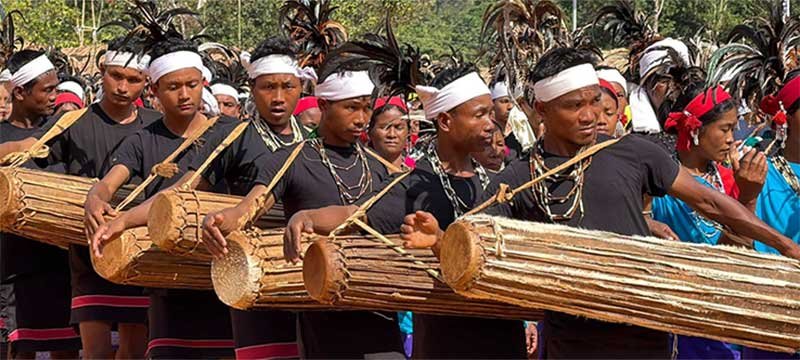
Wangala is the traditional harvest festival of the Garo or A·chik people and is observed as an expression of gratitude to Misi Saljong, regarded as the giver of fertility and a bountiful harvest. Rooted in the agricultural traditions of jhum or shifting cultivation, the festival marks the end of the farming season and brings communities together through rituals, music, dance and feasting.
Traditional Wangala observances include ceremonies such as Rugala, where offerings are made by the Nokma or village chief, followed by the Cha’chat So’a ritual.
The organised version of the festival began in 1976 at Asanang near Tura, at a time when traditional village-level celebrations were facing challenges due to changing social conditions. The initiative aimed to preserve Garo music, dance, rituals and cultural identity.
Also Read- Arunachal: Anti-dam activist Tajong Talom Detained Again Shortly After Release from Pasighat Jail
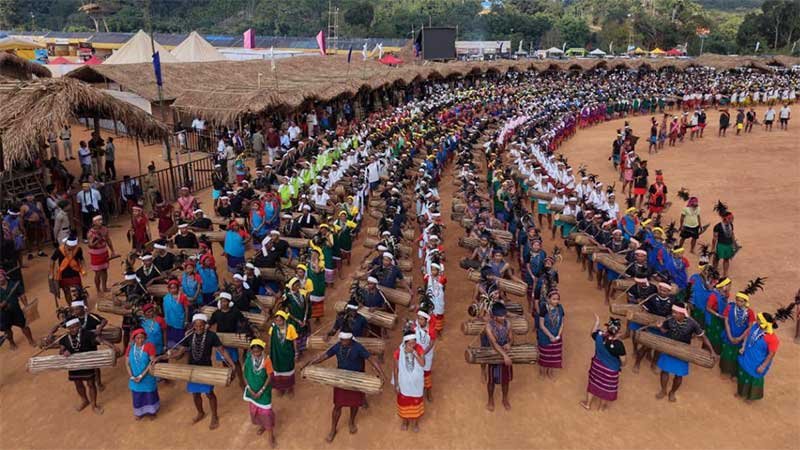
Over the decades, the festival has evolved from the original Hundred Drums format into a major cultural and tourism platform. The venue was shifted to the Garo Heritage Village at Chibagre in 2020, providing a larger space for the growing celebrations.
Besides the spectacular drum performances, the Golden Jubilee programme includes traditional dances, folk-song competitions, indigenous games, oral traditions, handloom and handicraft exhibitions and community rituals.
Beyond its cultural spectacle, Wangala continues to play an important role in preserving the identity and traditions of the Garo people. The festival strengthens community bonds, celebrates the matrilineal heritage of the A·chik people and introduces younger generations to traditional music, dance and rituals.
The Golden Jubilee celebrations have also attracted participation and interest from Garo communities living in neighbouring states, including Assam, Nagaland and Tripura, underlining the festival’s growing cultural significance beyond Meghalaya.
As the celebrations continue until November 14, all eyes will be on the historic attempt to bring 1,000 drums together in a single performance, creating what could become one of the defining moments in the five-decade history of the Wangala Festival.