
Meghalaya Govt Refuses to Scrap Rs 151-Crore Shillong Peak Ropeway Project
As protests against the ₹151-crore Shillong Peak Ropeway Project intensify, the Meghalaya government has ruled out scrapping or relocating the project, even as civil society groups raise concerns over water sources, forests and ecological damage.
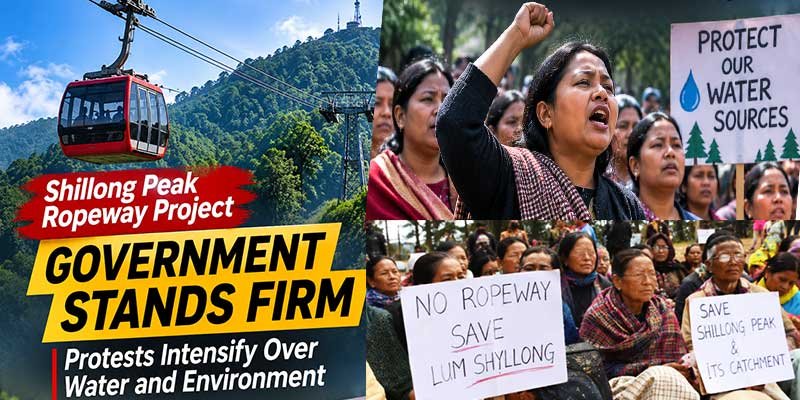
SHILLONG: The Meghalaya government has firmly ruled out scrapping or relocating the proposed ₹151-crore Shillong Peak Ropeway Project, even as protests against the project continue to intensify over concerns related to water security, forest conservation and environmental sustainability.

The standoff has emerged as one of the most significant public controversies surrounding urban development and tourism infrastructure in Shillong in recent weeks. Civil society groups and residents, operating under the banner of the Joint Action Committee (JAC) Against the Shillong Ropeway Project, have launched an indefinite agitation demanding that the project either be cancelled or shifted to another location.
The project involves the construction of a 913-metre aerial passenger ropeway connecting Madan Laban, or Riat Laban, with the Shillong Peak Viewpoint. Implemented by the Meghalaya Ropeway Development Authority under the state Tourism Department, the project is estimated to cost ₹151 crore.
However, the central issue driving the protest is not simply opposition to the ropeway itself, but concern over its proposed location near the ecologically sensitive U Lum Shyllong area, which protesters describe as an important water catchment zone for Shillong.


Also Read- Shillong Turns White After Heavy Hailstorm, Creating Rare Snow-Like Scene
Protest Movement Gains Momentum
Since November 6, protesters have been staging an indefinite sit-in near the U Kiang Nangbah statue at Civil Hospital Point. The agitation has drawn significant participation from local residents, particularly women.
The situation escalated further during a public consultation meeting convened by South Shillong MLA and Cabinet Minister Sanbor Shullai on November 11. Protesters reportedly disrupted the meeting, demanding the immediate cancellation of the project and questioning the consultation process.
On November 12, hundreds of women protesters marched towards the Meghalaya Secretariat carrying placards highlighting concerns over the protection of local catchment areas and water resources.
The protests indicate growing public anxiety about the possible long-term environmental consequences of infrastructure development in Shillong’s sensitive hill ecosystem.
Also Read- Golden Jubilee of 1000 Drums Wangala Festival Opens in Meghalaya
Water Security Remains the Core Concern
The JAC and environmental campaigners have argued that construction activity could affect underground water systems and natural springs connected to the Shillong Peak region.
According to the protesters, the area plays an important role in maintaining water resources for parts of Shillong, and any major construction involving foundations, machinery and increased human activity could potentially affect the ecological balance.
Environmental groups have also raised concerns about possible forest degradation, biodiversity loss and the impact of increased tourist activity.
Critics have further questioned earlier consultation and clearance processes, with some opposition leaders and environmental activists arguing that the level of public participation during earlier hearings was inadequate.
The controversy could also move into the legal arena, with critics indicating the possibility of challenges before the Meghalaya High Court and the National Green Tribunal.
Also Read- Tensions Flare Outside Meghalaya Secretariat Over Shillong Ropeway Project
Government Rejects Calls to Cancel or Shift Project
Despite the growing protests, the Meghalaya Democratic Alliance government has maintained that the project will continue.
Deputy Chief Minister Prestone Tynsong has said that environmental concerns are based on what the government considers misplaced fears, maintaining that the project underwent inspections and assessments by relevant departments and technical experts before approvals were granted.
Tourism Minister Paul Lyngdoh has also stressed that the government is bound by long-term agreements connected with the project and that cancelling it at the present stage would not be feasible.
At the same time, the government has continued to offer dialogue with the protesters in an effort to address concerns and reduce tensions.
Government Defends Environmental Safeguards
In its official clarification, the Meghalaya Tourism Department has stated that the ropeway design was modified to minimise environmental damage.
According to the department, the six support towers would occupy only a small portion of the total area, while the alignment has been designed to allow the gondola system to move above the forest canopy, reducing the need for extensive tree felling.
Officials have also maintained that the support structures are located on a ridge, while natural springs are situated further downslope.
The government has further stated that the project has received the required No-Objection Certificates from agencies including the Indian Air Force, Indian Army and the Airports Authority of India.
Expert Panel Proposal Fails to Break Deadlock
In an attempt to address concerns over water security, the 19-South Shillong Advisory Committee reportedly recommended the formation of an independent expert panel involving specialists from institutions such as IITs and NITs.
The proposed panel would examine the possible impact of the project on local water sources.
However, the JAC has rejected the proposal and continues to demand cancellation or relocation of the project, indicating that the dispute remains unresolved.
Development Versus Environmental Protection
The Shillong Peak Ropeway project has now developed into a wider debate over the balance between tourism-led infrastructure development and ecological protection.
Supporters believe the project could create employment, support local businesses and provide a modern alternative to road-based travel to Shillong Peak. They also argue that the ropeway could help reduce traffic pressure while strengthening Shillong’s tourism profile.
Opponents, however, maintain that economic benefits cannot come at the cost of water security and environmentally sensitive forest areas.
With construction scheduled to continue and protests showing no immediate signs of ending, the Shillong Peak Ropeway Project remains at a critical stage. The government’s willingness to continue dialogue may determine whether the dispute moves towards a negotiated solution or develops into a larger environmental and legal confrontation.