Modi’s ‘A for Assam’: From Vision to Delivery- By Sarbananda Sonowal
Union Minister Sarbananda Sonowal outlines how Assam’s development trajectory has shifted since 2014 under Prime Minister Narendra Modi’s leadership.
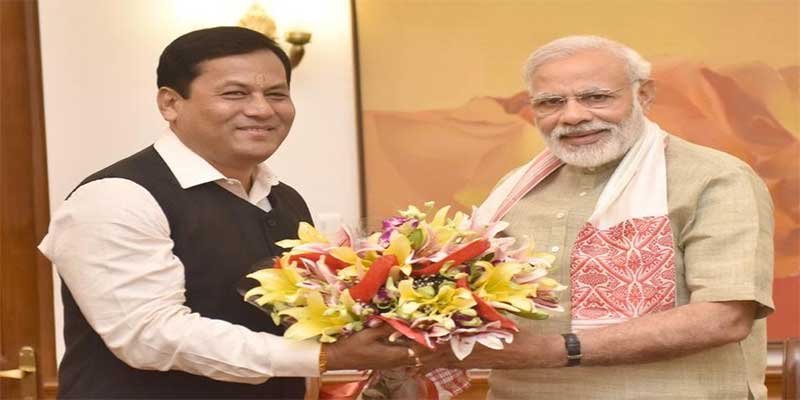
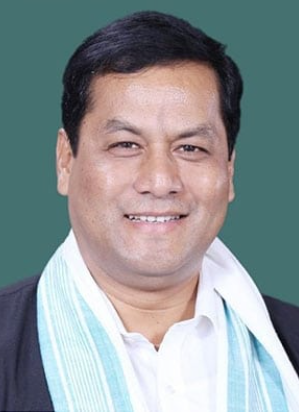 Prime Minister Modi ji’s ‘A’ for Assam, the journey from Vision to Victory By — Sarbananda Sonowal
Union Minister of Ports, Shipping & Waterways

Since 2014, under the dynamic leadership of Prime Minister Narendra Modi ji, the developmental story of Assam and that of NER, has fundamentally changed. Our region, which historically remained in the periphery of national focus, have since moved to the core of India’s growth vision — as the Ashtalakshmi and a new engine of development, the growth multiplier of a new Bharat.
For decades, geography was often cited as an excuse, diversity as a challenge, and distance as a limitation. Yet, the deeper issue was one of political attention and intent. Aspirations born out of historic movements remained unaddressed for years, while the region’s economic and strategic potential went largely untapped. The change to this inertia — ‘Paribartan’ — began with PM Narendra Modiji’s powerful leadership at the national level.
Led by PM Modi ji, Assam found strong expression from 2016 onwards with the formation of the BJP-led NDA government, creating the momentum of a true double-engine government. Assam entered a new development cycle marked by clear intent, clearly focussed on execution over announcements, ensuring that flagship central initiatives delivered visible results on ground. The foundations of several landmark projects shaping Assam’s modern trajectory were laid, including AIIMS Guwahati, the new terminal at Lokpriya Gopinath Bordoloi International Airport, Swahid Smarak, the Numaligarh Bio-Ethanol Plant and the Batadrava Than project. With their gradual commissioning, the BJP-led NDA’s governance model of vision of growth, mission to realise it, and ultimately to commission found strong expression.


Budgetary allocation for the Northeast has risen from ₹2,332 crore in 2014–15 to ₹5,900 crore in 2024–25—a 2.5-fold increase. Externally aided projects worth over ₹1.35 lakh crore between 2017 and 2023 have strengthened social and physical infrastructure across the region. This sustained investment has corrected historical imbalances and restored confidence among business interests to invest in the state.
Connectivity has been the most powerful catalyst of transformation. Railway investment in the Northeast has increased fivefold, with cumulative allocations exceeding ₹62,000 crore and projects worth over ₹77,000 crore underway. Engineering landmarks such as the Bogibeel rail-cum-road bridge as well as the Dr Bhupen Hazarika Setu have permanently altered Assam’s logistics landscape, while rail connectivity to state capitals has integrated the region with the national mainstream.
Road infrastructure witnessed a similar push, with over 11,000 km of highways upgraded or built, improving access to markets, healthcare and education. Air connectivity has doubled, supported by the UDAN scheme.
A defining milestone in this journey is the inauguration of the new terminal building at Lokpriya Gopinath Bordoloi International Airport, Guwahati, by PM Modi ji. For decades, Assam’s principal airport functioned with constrained capacity despite Guwahati’s role as the gateway to the Northeast. The new terminal marks a decisive break from that legacy of neglect.
Spread across 1.40 lakh square metres—nearly seven times the earlier terminal—the new facility increases annual passenger handling capacity from 3.4 million to over 13 million with peak-hour capacity has risen from 800 passengers to nearly 3,900. Aircraft parking has expanded to include wide-body operations, security and baggage systems along with car parking have been scaled up. Built at a cost of around ₹4,000 crore, the terminal aligns Guwahati with global standards and reinforces Assam’s position as the region’s principal transport hub.
Inland waterways have emerged as another pillar of Assam’s transformation. The Brahmaputra and Barak rivers, central to the region’s civilisation, are now being integrated into India’s modern logistics network. Brahmaputra (NW-2) and Barak (NW-16) are witnessing assured-depth dredging, modern cargo and tourist terminals at Pandu, Dhubri, Jogighopa and Bogibeel, the development of ship repair and navigational infrastructure. These enriched our transportation matrix resulting in lower costs, improving multimodal connectivity and reconnecting the business interest with global trade.
Under the visionary leadership of PM Narendra Modi ji, industrial growth has followed connectivity. The expansion of Numaligarh Refinery from 3 to 9 MMTPA, with an investment exceeding ₹22,000 crore, has strengthened Assam’s role as an energy hub. India’s first bamboo-based bio-refinery at Numaligarh has empowered thousands of farmers while advancing the green energy transition. As PM Modi ji lay the foundation stone to set up the Namrup IV fertiliser plant, it aims to fulfil a five-decade-old aspiration of Assam’s as well as the Northeast farmers and strengthens national fertiliser self-reliance. The upcoming semiconductor assembly at Jagiroad signals Assam’s entry into high-technology manufacturing and global supply chains.
Along the Brahmaputra, riverfront development in Assam is being taken forward through a coordinated national effort for river conservation initiatives, targeted support for the Northeast, and urban renewal missions—reflecting PM Narendra Modi ji’s emphasis on combining infrastructure, ecology and public spaces in the development of the region. The Indo–Israel Centre of Excellence for Vegetables at Khetri introduced Israeli expertise in drip irrigation, protected cultivation and soil-less farming to Assam’s farmers. Implemented under the Indo–Israel Agricultural Project (IIAP), it strengthened climate-smart agriculture through focused technology transfer and high-value crop promotion.
Healthcare & education have also seen structural change. AIIMS Guwahati—the first in the Northeast—has become a regional healthcare anchor, complemented by new medical colleges supplemented by a wider cancer care network. Investments in skill development and education are strengthening human capital. This healthcare network provides Assam with a unique opportunity to provide people a world class healthcare, an aspiration of the people finally being realised.
Equally significant is PM Modi’s sensitivity to Assam’s emotional and historical consciousness. Modi ji has been the biggest brand ambassador of Assamese culture as he wears our beloved ‘Gamusa’ long before he became PM. This shows his unflinching love for the people, their culture and their identity. The martyrs of the Assam Agitation have been formally honoured, their sacrifices institutionalised through ‘Swahid Smarak Khetra’, and their families acknowledged with dignity. Long-overdue national recognition for our icons such as Lachit Barphukan and Bharat Ratna for Dr Bhupen Hazarika in 2019 has restored cultural pride and corrected historical omissions. As the historic Charaideo Maidam has been recognised as a UNESCO World Heritage Site, it brings global acknowledgment to the state’s rich civilisational and cultural legacy.
Today, Assam stands more connected, more confident and more competitive than before. This is Modi ji’s “A” for Assam—Advantage Assam—built on trust, decisive governance and a long-term vision that integrates infrastructure with identity. The journey continues with a clear direction: a stronger Assam at the heart of a stronger India. PM Narendra Modi continues to ace for the growth story of Assam and the Northeast, championing the hopes and aspirations of the people of the region.