Hundreds Feared Dead in Pakistani Airstrike on Kabul Drug Rehabilitation Hospital
Afghan authorities claim a Pakistani airstrike hit a drug rehabilitation hospital in Kabul, leaving hundreds feared dead, while Islamabad denies targeting civilian facilities.
NEWS DESK— Afghan authorities have accused Pakistan of carrying out a deadly airstrike on a major drug addiction treatment hospital in the Afghan capital late Monday, claiming it killed at least 400 people and injured more than 250 others in one of the deadliest incidents in the escalating border conflict between the two nations.

The strike targeted the Omid Addiction Treatment Hospital (also referred to as the Omar Addiction Treatment Hospital), a large facility in Kabul reportedly capable of housing up to 2,000 patients undergoing rehabilitation for drug addiction.
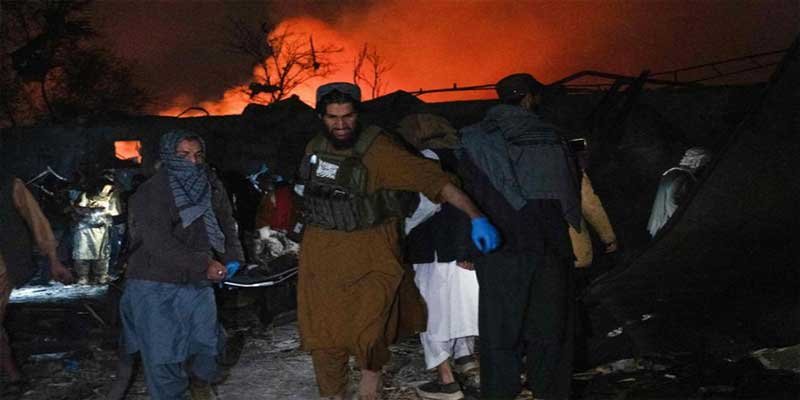
Taliban officials described the attack, which occurred around 9 p.m. local time on March 16, as having destroyed a significant portion of the complex, with rescuers still combing through charred debris and rubble for survivors on Tuesday.
Also Read- Nagaland: NSF Opposes Mandatory Singing of Vande Mataram


Afghan Deputy Government Spokesman and health officials provided the grim toll, stating that many of the victims were patients receiving treatment, along with medical staff. Images and video from the scene showed smoke rising from the site, firefighters at work, and families searching desperately for loved ones amid the wreckage. One survivor told Reuters the scene was “like doomsday.”
Pakistan has strongly denied targeting the hospital or any civilian facility. Islamabad stated that its military conducted precision airstrikes on Monday against militant targets in Kabul and Nangahar province, linked to groups it accuses of carrying out cross-border attacks inside Pakistan. Pakistani officials dismissed the Afghan claims as “false” and insisted no civilian sites were hit.
Also Read- NIA Arrests 7 Foreign Nationals Over Terror Plot
The incident comes amid a sharp deterioration in relations between Afghanistan and Pakistan since late February 2026, marked by repeated border clashes, tit-for-tat accusations of harboring militants, and previous Pakistani strikes in Afghan territory. This marks a dramatic escalation, with the reported casualty figures—if confirmed—making it one of the highest single-incident death tolls in the ongoing tensions.
The United Nations and international observers have called for restraint and an independent investigation into the strike, emphasizing the protection of civilian infrastructure such as hospitals under international humanitarian law. India has condemned the attack as “barbaric,” while other regional actors have urged de-escalation.
Also Read- Manipur: Security Forces Arrest PREPAK, KYKL Cadres
Rescue operations continued into Tuesday, with the death toll described as preliminary by some sources and potentially subject to revision. The Taliban government has vowed a strong response, with one spokesperson warning that Afghanistan would “respond in their language.”
This attack has drawn widespread international attention, highlighting the fragile security situation in the region and the humanitarian challenges posed by the cross-border conflict.