
India’s Vultures Show No Clear Sign of Recovery, State of India’s Birds Data Finds
Data from the State of India’s Birds 2025 update indicates that India’s vulture populations have yet to show a clear recovery, with multiple threats continuing to affect the birds.
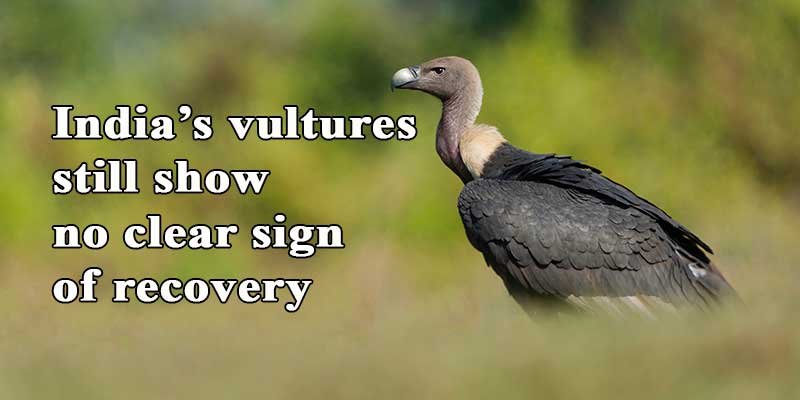
BENGALURU- India’s vulture populations have shown no clear sign of recovery, according to recent trend data from the State of India’s Birds (SoIB) partnership, highlighting continuing challenges in conserving some of the country’s most threatened bird species.

The findings have been highlighted on International Vulture Awareness Day, observed annually on the first Saturday of September. The SoIB 2025 update, available since June, tracks India’s vulture species and indicates that their populations have not shown any significant recovery.
The White-rumped, Slender-billed, Indian and Red-headed Vultures are classified as Critically Endangered by the International Union for Conservation of Nature (IUCN), while the Egyptian Vulture is classified as Endangered.
Drug bans have not yet translated into clear recovery
India banned the veterinary use of diclofenac in 2006, following the catastrophic decline in vulture populations during the 1990s and 2000s. The government has subsequently banned aceclofenac, ketoprofen and, most recently, nimesulide for veterinary use.


However, the conservation community continues to express concern over implementation. According to the release, human formulations of some of these medicines are being misused for veterinary purposes, while research into the safety of other NSAIDs is continuing.
Also Read- Assam: Three of Family Killed in Landslide in Guwahati’s Noonmati
Chris Bowden, Advisor to the Saving Asia’s Vultures from Extinction (SAVE) consortium, said the continuing downward trends in India-wide eBird data were a major concern. He pointed to earlier road-transect data published by the Bombay Natural History Society (BNHS) in 2024, which also indicated no population recovery in recent years.
Bowden also credited the government’s 2006 veterinary diclofenac ban as a major conservation intervention and said safety testing of veterinary drugs before they are licensed could further support vulture conservation.
Multiple threats continue to affect vultures
The conservation challenge extends beyond veterinary drugs. The SoIB material identifies electrocution, collisions with power infrastructure and wind turbines, disturbance at carcass sites and secondary poisoning as additional threats.
A reported incident at Dudhwa Tiger Reserve in April 2026 illustrated the risks associated with secondary poisoning. More than 25 Himalayan Vultures reportedly died after feeding on carcasses of dogs that had died from poisoning.
The release stresses the importance of continued monitoring to better understand population trends and identify threats. Vultures are slow-breeding and long-lived birds, meaning that changes in their populations may take time to become visible.
Also Read- Seven killed in NH-27 minibus-truck crash near Sonapur; CM blames NHAI, locals protest at toll plaza
Dr Sachin Ranade, Deputy Director of BNHS, said nationwide surveys, colony monitoring and vulture reintroduction efforts were continuing and providing new possibilities for conservation.
Dr Dipankar Ghose, Senior Director, Biodiversity Conservation, WWF-India, said long-term monitoring, field-based conservation measures, nest and colony monitoring and satellite-tagging were being used to understand vulture behaviour, habitat use and threats. Measures also include reducing electrocution risks around important flight paths, nesting and roosting sites.
The release also points to the value of combining large-scale citizen-science data, including information from eBird, with systematic field monitoring to provide a clearer understanding of vulture populations and the challenges facing their conservation.
The latest findings underline that vulture conservation in India remains a continuing effort, requiring sustained monitoring and attention to both veterinary drug-related and wider environmental threats.