Manipur and Kerala Lead India’s Grassroots Football Revolution
Systematic coach education, grassroots leagues, and AIFF's nationwide scouting network are creating a sustainable pathway from local football fields to international youth tournaments.
Manipur and Kerala Lead India’s New Football Development Model Through Grassroots Systems
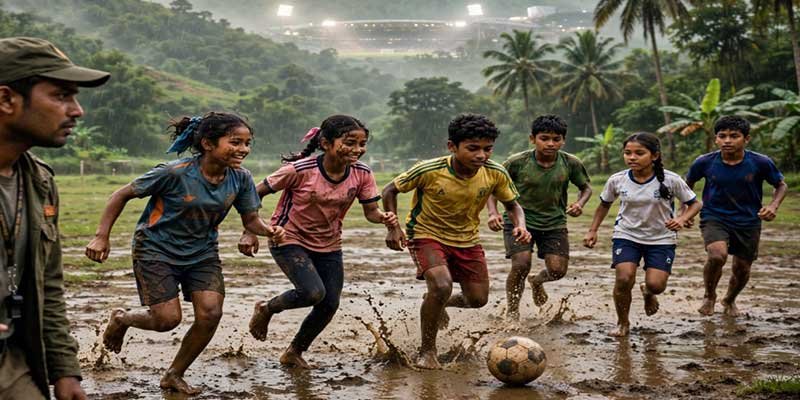
SPORTS DESK- India’s football landscape is witnessing a structural transformation, with Manipur and Kerala emerging as leading examples of how systematic grassroots development can produce elite talent. Rather than relying solely on natural ability, both states have invested in coaching education, youth competitions, and structured talent identification, creating sustainable pathways for young footballers.

Manipur has long been regarded as one of India’s strongest football-producing states, consistently performing well in national competitions across senior and junior levels. However, recent progress has been driven by an extensive coaching initiative undertaken by the All Manipur Football Association (AMFA).
Under the leadership of AMFA President Moirangthem Ratan Kumar Singh, the association has conducted more than 30 AIFF E and D Certificate coaching courses within a year across all 25 districts, aiming to train over 700 local coaches. The availability of coach educators such as former India international Gouramangi Singh, who delivers courses in the Manipuri language, has enabled standardized coaching methods to reach even remote districts.
Also Read- Assam Flood Situation Improves Gradually; CM Himanta Biswa Sarma Conducts On-Ground Review


The impact is visible at both the national and international levels. Manipuri players continue to form a significant part of the Indian women’s national football team, while several footballers from the state featured prominently in Minerva Academy’s youth side that captured the Gothia Cup in Sweden, Dana Cup in Denmark, and Norway Cup in Norway. The team reportedly remained unbeaten in 26 international matches, scoring 295 goals, while players including Konthoujam Yohenba Singh and Huidrom Tony received individual Best Player honours.
Kerala has adopted a different but equally structured approach. The Kerala Football Association (KFA) introduced mandatory grassroots coach certification beginning in 2017-18. Academy coaches participating in the KFA Children’s League (U10 and U12) and Youth League (U14 and U16) are required to complete AIFF Grassroots Leaders certification before coaching competitive teams.
This policy has strengthened coaching standards while supporting an expanding network of age-group competitions across the state. Combined with Kerala’s strong football culture and the popularity of professional clubs such as Kerala Blasters, the model has helped establish regular competitive opportunities for young players at the village level.
Also Read- Assam Flood Crisis Persists; Salman Khan, Randeep Hooda and Kartik Aaryan Extend Support
At the national level, the All India Football Federation (AIFF) has sought to integrate these state-level initiatives through its Blue Cubs programme under Vision 2047. The programme aims to engage 35 million children between the ages of four and twelve by 2026 through small-sided football formats designed to encourage skill development.
The federation has also expanded its nationwide scouting programme since 2018, conducting talent identification exercises across states in partnership with state football associations. Centralised trials for age-group categories, including Under-14 boys and Under-16 girls, are now being organised, marking a broader effort to provide equal scouting opportunities for both male and female footballers.
The emerging football development model reflects a significant shift in India’s approach to youth football. Instead of depending on individual scouts to identify talent from isolated regions, young players increasingly benefit from qualified coaches, organised competitions, and structured pathways linking grassroots football to national camps and international exposure. Analysts suggest that this integrated ecosystem may play a crucial role in strengthening India’s football development over the coming years.