Nagaland: NSF Opposes Mandatory Singing of Vande Mataram
Naga Students Federation submits memorandum to the President of India opposing the compulsory observance of Vande Mataram in official events and educational institutions.
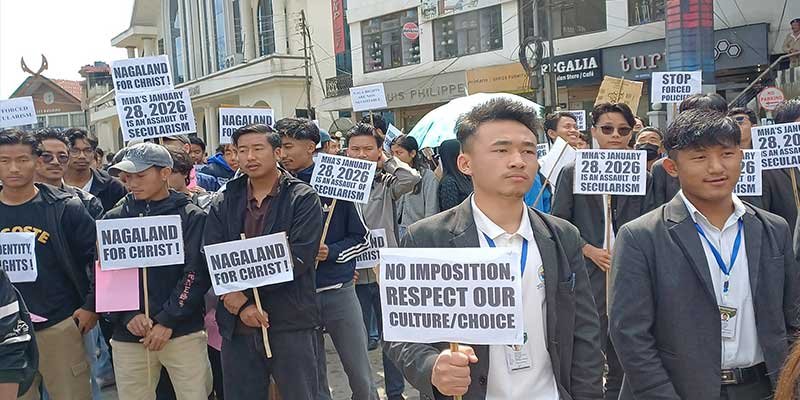
KOHIMA: The Naga Students Federation has submitted a memorandum to president Droupadi Murmu opposing the directive mandating the compulsory singing or playing of Vande Mataram during official functions and in educational institutions across the Naga homeland.

According to the federation, the memorandum was submitted through the Governor of Nagaland. The student body also called for a mass public rally in Kohima on March 16 to express opposition to the directive.
In a statement, NSF referred to a notification issued by the Ministry of Home Affairs on January 28, 2026, which mandates the observance of the national song at official functions and educational institutions. The federation stated that the directive has implications for the Naga homeland and raised concerns over its potential impact on cultural and religious sensitivities.
Also Read- Meghalaya Extends GHADC Term by Six Months

The memorandum stated that while the Naga people respect national symbols and the traditions of other communities, making the singing of the national song compulsory raises issues related to freedom of conscience, religion and cultural identity.
NSF further argued that the devotional imagery associated with the song could conflict with the beliefs of communities that place strong emphasis on freedom of faith and cultural diversity.
The federation also cited international human rights frameworks, including the United Nations’s Universal Declaration of Human Rights and the International Covenant on Civil and Political Rights, emphasising the importance of protecting the rights to freedom of thought, religion and cultural expression.
Also Read- Storm, Rainfall, Hailstorm Disrupt Life in Parts of Sikkim; One Dead, Three Injured
According to the student body, educational institutions should remain spaces that encourage intellectual freedom and cultural sensitivity rather than platforms for ideological enforcement.
The memorandum was jointly endorsed by Mteisüding Heraang and Kenilo Kent. It was also supported by Neingulo Krome and Rev Dr N Paphino.