Assam: Justice After 8 Years in Karbi Anglong Lynching Case
Court delivers verdict in 2018 lynching case after eight-year trial marked by complex investigation, witness intimidation, and legal delays.
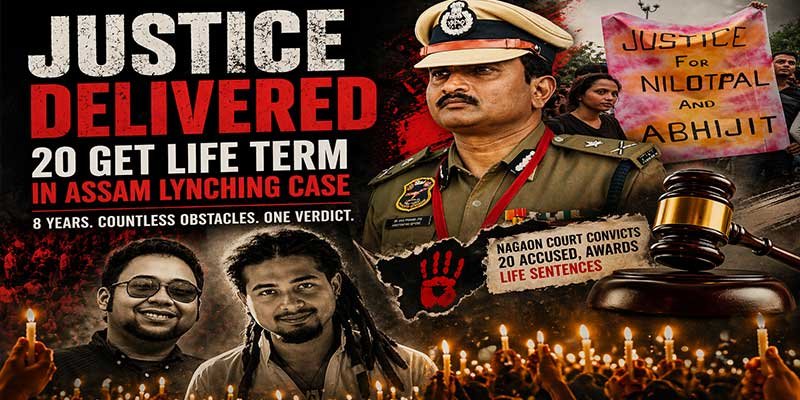
NAGAON- In a significant judgment delivered nearly eight years after the incident, the Nagaon Sessions Court has convicted 20 individuals and sentenced them to life imprisonment in connection with the 2018 mob lynching of Abhijit Nath and Nilotpal Das in Karbi Anglong district.

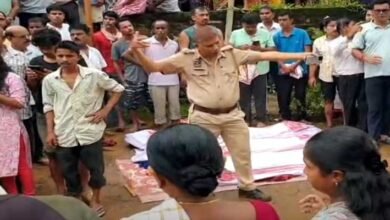
The victims, both in their twenties, had travelled to the region on June 8, 2018, to visit a scenic area but were attacked in Panjuri Kachari village after false rumours spread that they were child abductors. A video capturing the assault—showing one of the victims pleading for mercy—went viral, triggering widespread outrage, protests, and candlelight marches across Assam.
Investigation Led by SP Dr. Siva Prasad
The investigation was led by then Superintendent of Police, Dr. Siva Prasad, whose role proved critical in navigating one of the most challenging mob violence cases in the state.


From the outset, the case posed serious difficulties. There was no specific legal provision for mob lynching at the time, forcing investigators to register the case under murder charges, which demand a higher evidentiary threshold. The crime occurred at night during heavy rain, and the scene was quickly washed away, leaving minimal physical evidence.
Also Read- Manipur Paralysed by Shutdowns, Protests, Candlelight Vigils
Further complicating matters, most of the local population fled into nearby hills following the incident, and there were virtually no independent witnesses willing to come forward.
Under Dr. Siva Prasad’s leadership, the police launched a large-scale, methodical investigation. Over 300 individuals who had shared the viral video were interrogated to trace its origin and identify participants. Through painstaking reconstruction of events and correlation of fragmented evidence, 48 individuals were eventually identified as directly involved in the lynching.
Evidence Collection and Rapid Chargesheet
To strengthen the case, police ensured that witness statements were recorded before a magistrate under Section 164 of the Criminal Procedure Code. Investigators also relied on discoveries admissible under Section 27 of the Indian Evidence Act, supported by serological and forensic findings.
The investigation was completed in just 35 days, a relatively short period for a case of this scale and complexity. Forensic analysis of nearly 140 exhibits followed, and a comprehensive chargesheet—running into hundreds of pages—was filed on the 83rd day after the incident.
Also Read- Manipur: Firing Near CM Event Leaves One Injured
The Gauhati High Court later transferred the trial to Nagaon district and directed that proceedings be conducted without delay. The prosecution was handled by Special Public Prosecutor Ziaur Kamar, while senior advocate Manas Sarania represented the defence.
Trial Setbacks and Witness Hostility
Despite the strong investigative groundwork, the trial faced multiple setbacks. Examination of eyewitnesses began only after an eight-month delay, during which witnesses reportedly faced intimidation and pressure from families of the accused.
A case of witness intimidation was registered at Dokmoka Police Station, and the Gauhati High Court denied anticipatory bail to two defence lawyers, noting evidence of attempts to influence witnesses.
Also Read- Naga-Kuki Clashes Erupt in Manipur
However, the impact was significant: more than half of the witnesses who had earlier given statements under Section 164 CrPC retracted them during the trial. Additional delays were caused by legal petitions, including claims of juvenility by some accused and prolonged absence of defence counsel at certain stages.
Verdict and Broader Implications
Despite these challenges, the court found sufficient evidence to convict 20 individuals, marking a rare instance of large-scale conviction in a single mob lynching case. Notably, none of the accused were granted bail during the entire eight-year trial.
Legal observers point out that such convictions are uncommon. A comparable case in Assam—the 2019 lynching of a doctor at Teok Tea Estate—also resulted in mass convictions, and was similarly investigated by a Special Investigation Team led by Dr. Siva Prasad, then serving as DIG of Eastern Range.
The case has also contributed to the evolving legal framework on mob violence in India. The Bharatiya Nyaya Sanhita, which came into effect in July 2024, now includes specific provisions addressing mob lynching under Section 103(2).
The verdict underscores both the possibilities and limitations of the criminal justice system in handling cases of collective violence—highlighting the importance of timely trials, witness protection, and specialised legal provisions.