
Bhutan Glacial Lake Burst Puts Bengal, Assam on High Flood Alert; Over 10,000 Evacuated
The surge of water into the Mo Chhu river system, which feeds the Punatsangchhu (known as the Sankosh River in India), raised fears of a sudden rise in water levels downstream.
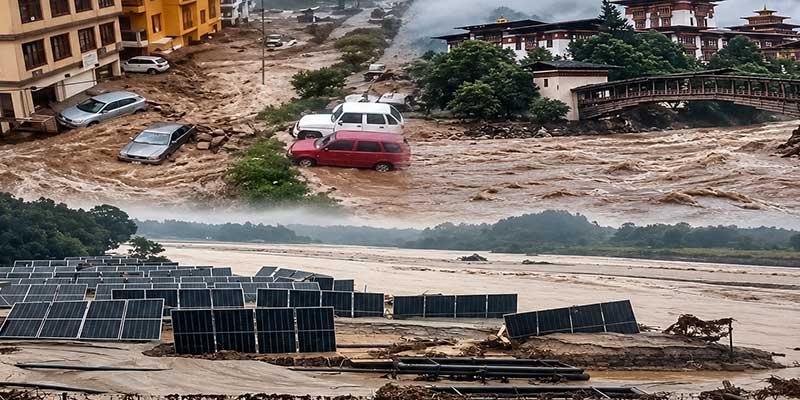
GUWAHATI- A glacial lake outburst flood (GLOF) at Shintaphu (also spelled Sintaphu) Lake in Bhutan’s Gasa district on Thursday evening (October 29, 2026) has triggered high flood alerts and precautionary evacuations in parts of West Bengal and Assam.

The surge of water into the Mo Chhu river system, which feeds the Punatsangchhu (known as the Sankosh River in India), raised fears of a sudden rise in water levels downstream.
No injuries or loss of life have been reported in Bhutan. State broadcaster BBS said the late-night flash flood washed away infrastructure at the popular Gasa Tshachu natural hot springs. Assessment of the full damage was hindered by darkness and the strong flow of floodwaters; two Bailey bridges may have been washed away, and sections of the road to Laya village were damaged, closing the route indefinitely.
Also Read- Two Kuki-Zo Youths Missing in Manipur’s Kangpokpi; CoTU Calls 48-Hour Shutdown


A solar-powered irrigation project was also partially damaged. The area around the hot springs had been evacuated in advance. Shintaphu Lake is one of Bhutan’s 17 potentially dangerous glacial lakes. Floodwaters had crossed Srigang in Kabesa Gewog, about eight kilometres from Punakha Dzong, by Friday morning. Reports indicated roughly 7.4 million cubic metres of water were released.
The Indian Embassy in Bhutan reported the GLOF to authorities. The Ministry of Jal Shakti and Central Water Commission issued a special flood advisory on October 29, stating: “Due to reported Flash flood in upper reaches of Punatsangchu (Sankosh river in India), water level is likely to rise suddenly in India in the districts of Alipurdwar of West Bengal and Dhubri of Assam. The flood water will travel downstream and will reach border in 6-8 hrs and likely to impact district of Alipurduar in West Bengal and Dubri in Assam.” Bhutan also alerted the administrations of Assam and West Bengal.
Also Read- ‘No PFR, No Dam’: Citizens Rally in Itanagar Against Proposed Siang Mega Dam
In West Bengal, authorities placed the Sankosh river system on red alert. More than 10,000 people were moved to safety in Alipurduar district as a precaution. Alipurduar Superintendent of Police Amit Kumar Shaw said approximately 4,000–5,000 people were accommodated in temporary shelters (including school buildings), while more than 6,000 others were relocated to safer areas. NDRF and SDRF teams were deployed in areas such as Tufanganj and Boxirhat in Cooch Behar district along the Sankosh. Alerts also covered parts of Jalpaiguri, Cooch Behar, and the Darjeeling hills.
West Bengal State Forest and Environment Minister Manoj Kumar Oraon issued a strong public appeal, urging residents along the Sankosh River—including upper Sankosh forest village, NKC Sankosh Tea Garden, Kumargram CD block, Chengmari, Valka Barabisa, Jharaguri, and Pakriguri—to warn others immediately and move to safety. He noted that a dam in Bhutan had breached and floodwaters were expected to surge downstream.
Also Read- Security Forces Seize AK-Series Rifles, Grenades and Bulletproof Gear in Manipur
In Assam, Chief Minister Himanta Biswa Sarma said the state government is closely monitoring the possible impact of the GLOF, with vulnerable revenue circles in Dhubri and Kokrajhar districts under watch. Disaster response teams were placed on standby.
By Friday morning, some officials reported a slight decrease in the intensity of the water flow from Bhutan, but administrations in both states remained on high alert, maintaining contact with Bhutanese authorities and continuously monitoring river levels. Residents in low-lying and riverbank areas have been advised to stay vigilant and follow official instructions.