Assamese Documentary Wins Jury Honour in Delhi
A documentary on Assam’s Tokari Geet secures jury mentions at national film festivals, highlighting efforts to preserve an oral folk tradition.
GUWAHATI- ( By Prantik Deka ) A documentary exploring the traditional Assamese folk music form Tokari Geet has received national recognition at two film festivals, drawing attention to efforts aimed at preserving an oral cultural tradition.

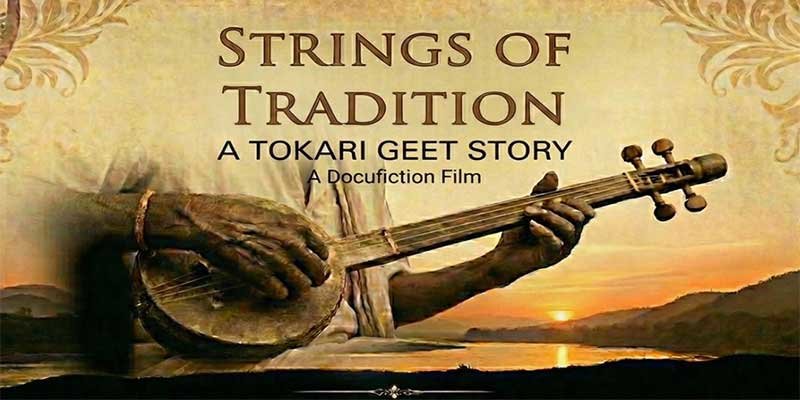
The feature documentary, Strings of Tradition: A Tokari Geet Story, was awarded an Honorable Jury Mention at the 16th Dada Saheb Phalke Film Festival-2026 held in New Delhi on April 30. It also received a Special Jury Mention at the Indian World Film Festival in Hyderabad.
Directed and produced by Dr. Aparna Buzarbaruah—an author, musician, and botanist—the film traces the journey of a scholar seeking to understand the philosophical and cultural depth of Tokari Geet, a devotional folk music tradition rooted in Assam. The narrative blends fiction with documentary elements, presenting both historical context and contemporary relevance.
Tokari Geet, traditionally performed with the tokari, a string instrument, is deeply embedded in Assam’s spiritual and cultural practices. The documentary emphasises the importance of preserving such traditions, particularly as they rely largely on oral transmission rather than written documentation.


To reconstruct the history of Tokari Geet, the filmmaker draws on the knowledge of practitioners and researchers, including Gautam Sharma, Khagen Gogoi, Hirak Jyoti Sharma, Dr. Jadab Baishya, and Nayan Jyoti Saikia. Their accounts provide insight into the art form’s pre-Sankari origins and its continued practice in contemporary Assam.
The 28-minute film also examines the legacy of Umakanta Bairagi, a Sangeet Natak Akademi awardee known for his role in preserving Tokari and Dehabichar Geet traditions. Through archival references and narrative reconstruction, the documentary situates Bairagi’s contributions within a broader cultural framework.
In addition to its thematic focus, the film documents the craftsmanship involved in making the tokari instrument, including the use of traditional materials such as Chatiyana wood. This depiction underscores the interconnectedness of music, craftsmanship, and spiritual practice within the tradition.
Produced under the banner of Rohini Production, the film reflects a collaborative effort combining artistic direction and technical expertise. The filmmakers have also indicated plans to use digital platforms and festival circuits to reach wider audiences, particularly younger generations.
The recognition at national film festivals highlights a growing interest in regional cultural narratives and raises questions about the sustainability of oral traditions in a rapidly digitising cultural landscape.