
VIDEO Explores Why India’s Gen Z Is Increasingly Anxious About the Future
The Video examines how academic pressure, recruitment delays, social media influence and fears surrounding artificial intelligence are shaping the outlook of India's youngest generation.
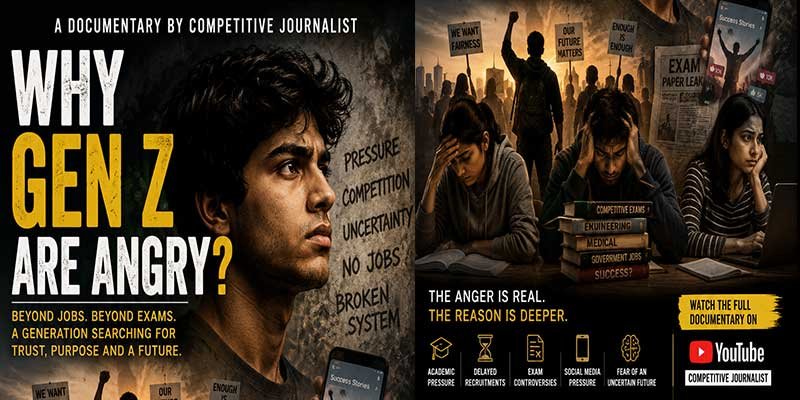
NEW DELHI: A Video titled “Why Is Gen Z Angry?” seeks to examine the growing frustration, anxiety and uncertainty being experienced by many young Indians as they navigate an increasingly competitive and rapidly changing world.

The video explores a range of challenges confronting Generation Z, including intense academic competition, recruitment delays, examination controversies and concerns about future employment opportunities. According to the video, these issues have contributed to a broader sense of uncertainty among young people regarding their prospects and place in society.
Rather than presenting youth frustration solely as a reaction to employment concerns, the video argues that the issue is rooted in deeper questions surrounding trust, fairness and opportunity. It suggests that many young Indians grew up with the expectation that education, hard work and perseverance would provide a stable pathway to success. However, a combination of systemic challenges and changing economic realities has led some to question whether those expectations can still be fulfilled.
Watch Video


The video also examines the role of social media in shaping perceptions and aspirations. Constant exposure to success stories, lifestyle content and achievement-driven narratives can create unrealistic benchmarks, potentially intensifying feelings of pressure, comparison and self-doubt among young audiences.
Another key theme explored in the video is the impact of technological transformation. As artificial intelligence, automation and evolving labour markets continue to reshape industries, many young people are increasingly concerned about long-term job security and the future nature of work.
Also Read- Cockroach Janta Party: Is India’s Gen Z Rewriting the Rules of Politics?
Despite focusing on these concerns, the video does not portray Generation Z as a pessimistic or disengaged generation. Instead, it depicts young people as actively seeking answers, demanding greater transparency and looking for equitable opportunities in education, employment and governance.
The video argues that what is often interpreted as anger may, in reality, reflect a broader demand for accountability, trust and hope. It suggests that the visible frustration among many young people stems from uncertainty about the future rather than dissatisfaction alone.
Concluding on a reflective note, the video states that Gen Z’s concerns extend beyond employment and economic opportunity. According to the film, the generation is seeking clarity, stability and confidence in a future that increasingly appears uncertain.
The Video’ s closing message reads: “Gen Z is not angry because it wants jobs alone. It is angry because it wants the darkness surrounding its future to be cleared.”