Development Is the Most Effective Tool Against Insurgency: Manipur CM Tells NITI Aayog
Addressing a meeting of Northeastern Chief Ministers and Chief Secretaries, Manipur Chief Minister Yumnam Khemchand Singh called for greater NITI Aayog support in infrastructure development, economic recovery and long-term peace-building.
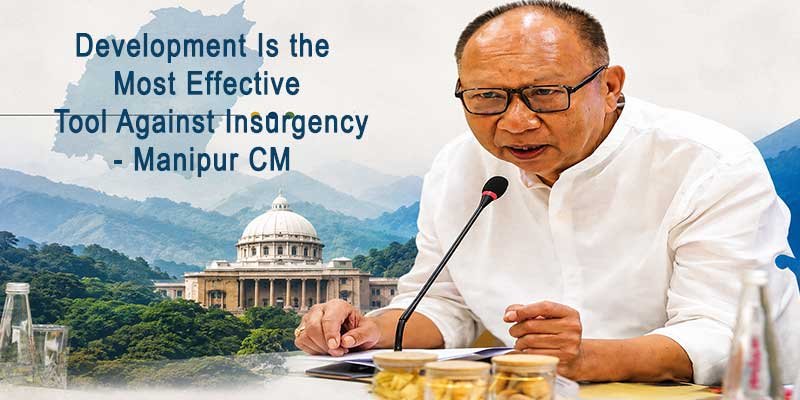
NEW DELHI/IMPHAL- Manipur Chief Minister Yumnam Khemchand Singh has urged NITI Aayog to play a more proactive role in the state’s economic recovery, peace-building efforts and long-term development, arguing that sustained development remains the most effective response to insurgency and social unrest.

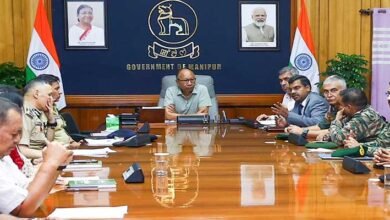
Speaking during an interaction between NITI Aayog and the Chief Ministers and Chief Secretaries of Northeastern states in New Delhi on June 12, Singh highlighted the economic, social and developmental challenges faced by Manipur in recent years and called for coordinated intervention to address them.
Referring to Prime Minister Narendra Modi’s description of the Northeast as India’s “Growth Engine” and “Ashtalakshmi,” the Chief Minister said development and stability are closely linked in the region. He requested NITI Aayog’s assistance in planning economic recovery, coordinating with central ministries and engaging international partners to accelerate growth.
Also Read- VIDEO Explores Why India’s Gen Z Is Increasingly Anxious About the Future


Connectivity emerged as a key focus of his presentation. Singh stressed the need for early completion of major infrastructure projects, including the railway connection to Imphal, national highway projects, airport terminal expansion, the Imphal Ring Road Project, the proposed Elevated Highway in Imphal, and the Imphal-Moreh Railway Project. According to the Chief Minister, these projects have the potential to significantly reshape the state’s developmental trajectory.
Highlighting the strategic importance of the Act East Policy, Singh noted that while Manipur is envisioned as India’s principal land gateway to Southeast Asia, implementation challenges, including cross-border instability, continue to affect project execution. To address these issues, he proposed the creation of a high-level “Act Fast Implementation Unit” and an “Act East Regional Coordination Cell” involving Northeastern states and the North Eastern Council.
Also Read- Cockroach Janta Party: Is India’s Gen Z Rewriting the Rules of Politics?
The Chief Minister also advocated for strengthening Manipur’s healthcare sector. He said institutions such as the Regional Institute of Medical Sciences (RIMS) and Jawaharlal Nehru Institute of Medical Sciences (JNIMS) require substantial modernization and suggested that Manipur could emerge as a medical tourism hub serving patients from Southeast Asia, particularly Myanmar. He sought NITI Aayog’s support in coordinating a super-specialty healthcare expansion framework for the state.
On the economic front, Singh pointed to the impact of security-related challenges on investment and infrastructure development. He argued that internal security concerns increase project costs and discourage private sector participation. To address this, he proposed a special fiscal incentive framework, including Vulnerability Gap Funding (VGF), for projects affected by security-related constraints.
Also Read- Massive Fire Destroys Nearly 4,000 EVMs used in recent polls in Kolkata
The Chief Minister further highlighted the unique geographical challenges faced by Northeastern states, arguing that difficult terrain often results in higher infrastructure costs. He proposed a Terrain-Weighted Cost Index Matrix that would provide a 20–30% fiscal premium in central fund allocations to offset these challenges.
Singh also underlined Manipur’s dependence on central grants, noting that the state’s own tax revenue constitutes only around 10% of total revenue receipts. He called for a roadmap to strengthen the state’s fiscal capacity through measures such as fiscal stabilisation grants, greater flexibility in centrally sponsored schemes and support from multilateral development institutions.
Concluding his remarks, the Chief Minister expressed confidence that the discussions would contribute to the goals of a “Viksit Manipur,” “Viksit North East,” and “Viksit Bharat @ 2047.” The meeting was attended by NITI Aayog Vice-Chairman Ashok Kumar Lahiri, Chief Ministers and Chief Secretaries of Northeastern states, and senior officials from the Centre and state governments.