Assam CM Says ‘Geographic Equity’ Essential for Realising Viksit Bharat 2047
Addressing NITI Aayog's meeting with Northeastern Chief Ministers, Assam Chief Minister Himanta Biswa Sarma proposed a development model based on "Geographic Equity" to ensure balanced regional growth across India.
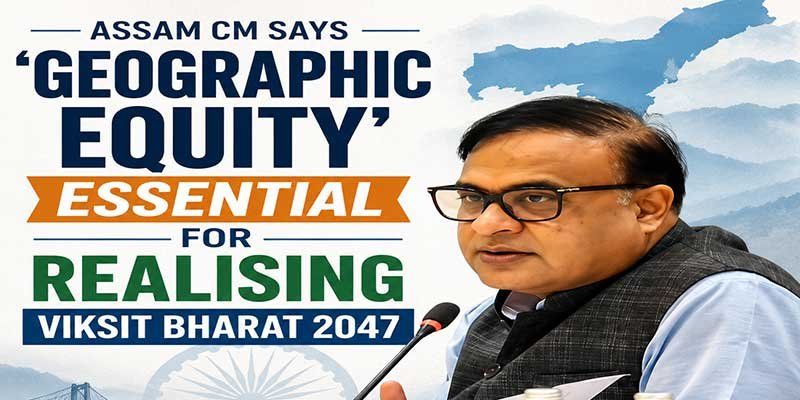
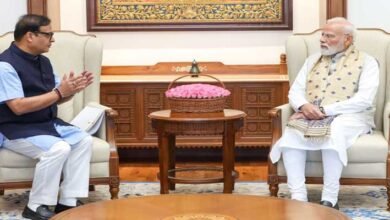
NEW DELHI- Assam Chief Minister Himanta Biswa Sarma on Friday called for a new development framework centred on “Geographic Equity,” arguing that India’s journey towards Viksit Bharat 2047 must focus not only on accelerating economic growth but also on ensuring that development reaches every region of the country.

Speaking at NITI Aayog’s interaction with Chief Ministers and Chief Secretaries of the Northeastern states in New Delhi, Sarma said the next phase of India’s development should prioritise broadening the geography of growth so that all regions can benefit from emerging economic opportunities.
The Chief Minister noted that under Prime Minister Narendra Modi’s leadership, the Northeast has moved from the margins of national policymaking to a more central position. He highlighted improvements in connectivity, infrastructure, peace initiatives and the implementation of the Act East Policy, which he said have enhanced the strategic importance of the region.
According to Sarma, these developments have laid a strong foundation for economic expansion and deeper integration of the Northeast with the national economy.


Also Read- VIDEO Explores Why India’s Gen Z Is Increasingly Anxious About the Future
Highlighting Assam’s recent progress, the Chief Minister said the state has witnessed growing investor confidence and increased investments in sectors such as manufacturing, logistics, renewable energy and technology. He cited the upcoming Tata Semiconductor facility as an example of Assam’s emerging industrial capabilities and said the state is increasingly contributing to India’s broader growth story.
However, Sarma acknowledged that geographical constraints continue to pose significant challenges for Assam and the wider Northeast. He observed that coastal states benefit from direct port access, lower logistics costs and shorter supply chains, whereas Assam remains effectively landlocked and dependent on a narrow transport corridor.
Also Read- Mission Senehjori Seeks to Take Assam’s Muga Silk from Farm Gate to Global Markets
Describing these as structural disadvantages, the Chief Minister argued that public investment in strategically important but geographically challenging regions should be assessed not merely on expenditure efficiency but also on national integration, regional balance and long-term competitiveness.
He termed this approach “Geographic Equity” and said it could help reduce regional disparities while strengthening national economic cohesion.
Also Read- Massive Fire Destroys Nearly 4,000 EVMs used in recent polls in Kolkata
The Chief Minister also focused on Assam’s demographic potential, describing the state’s young population as one of its greatest strengths. He called for skill development programmes to be aligned with emerging sectors such as semiconductors, artificial intelligence, green energy and advanced manufacturing to ensure greater participation of Northeastern youth in India’s evolving knowledge economy.
Concluding his address, Sarma said that if the previous decade was about integrating the Northeast into India’s development narrative, the coming decade should place the region at the centre of the country’s growth architecture.
Reaffirming Assam’s strategic role, he said the state is prepared to serve as a growth hub, a gateway economy and a bridge connecting India with the wider Asian region.