Gyanesh Kumar Under Protest Spotlight: CJP Rally in Mumbai, Student Agitation in Delhi
The Cockroach Janta Party held a large protest at Mumbai’s Shivaji Park, while AISA, SFI, NSUI, AAP and other groups mobilised in Delhi, where police detained hundreds after denying permission for the gathering.
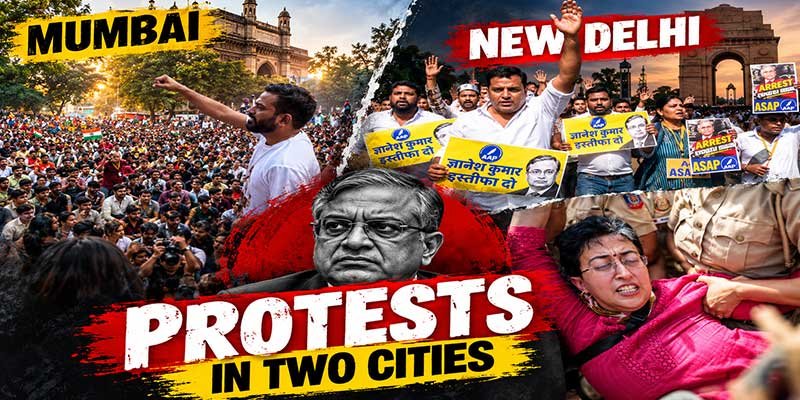
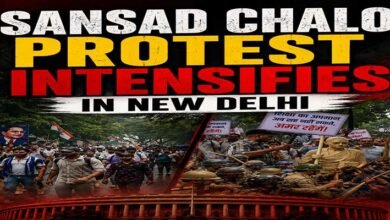
NEW DELHI- Protests over the Election Commission’s handling of electoral-roll revision and the Special Intensive Revision (SIR) took place simultaneously in Mumbai and New Delhi on Friday, with the Cockroach Janta Party (CJP) holding a major mobilisation at Shivaji Park and student and opposition groups facing police restrictions and mass detentions around Jantar Mantar.

The two demonstrations were organised separately but shared a central demand: accountability from Chief Election Commissioner Gyanesh Kumar over the SIR exercise and issues surrounding electoral rolls. Protesters called for Kumar’s resignation.
Thousands gather at Mumbai’s Shivaji Park
The Cockroach Janta Party, a youth-led movement founded by Abhijeet Dipke, held its protest at Mumbai’s Shivaji Park on Gandhi Jayanti despite Mumbai Police having denied permission for the proposed gathering.
The police had cited restrictions governing the use of Shivaji Park, the absence of required civic permission and concerns about traffic and emergency-vehicle movement in denying permission for the event.


Despite the restrictions, a large crowd assembled at the venue.
Also Read- Former State Bank of Sikkim GM Arrested Over Alleged Crores-High Asset Case
According to an estimate by the Mumbai Police Special Branch cited by The Times of India, around 9,000–10,000 people had gathered by 4 pm. Other reports described the turnout as being in the thousands.
CJP founder Abhijeet Dipke addressed the gathering and reiterated the organisation’s demand for the resignation of CEC Gyanesh Kumar. The organisation has alleged irregularities in the SIR process and raised concerns about changes to electoral rolls. These remain allegations made by the protesters and have not been established as findings of an independent adjudication.
The Mumbai protest was also attended by several public figures, including actors Naseeruddin Shah and Shabana Azmi, singer-composer Vishal Dadlani, activist Tushar Gandhi and others, according to reports.
Police presence around Shivaji Park
Security was substantially increased around Shivaji Park and Dadar ahead of and during the demonstration. Additional personnel were also deployed at Dadar railway station because of the expected crowd.
Railway authorities had earlier announced the deployment of additional Railway Protection Force and commercial staff at Dadar station, one of the major transport points closest to Shivaji Park.
The Mumbai Police had also expressed concern that a large gathering could affect traffic and the movement of emergency vehicles.
Also Read- Sikkim to Host First Himalayan Yak Festival in Gnathang Valley in October
Student groups mobilise in Delhi
At the same time, New Delhi witnessed a separate mobilisation involving student and youth organisations as well as political parties.
The protest around Jantar Mantar involved organisations including the All India Students’ Association (AISA), Students’ Federation of India (SFI), National Students’ Union of India (NSUI), Democratic Youth Federation of India (DYFI) and others. AAP leaders and other opposition figures also joined the mobilisation.
Delhi Police had denied permission for the proposed demonstration and imposed prohibitory restrictions in the New Delhi district. Large numbers of police and Central Armed Police Forces personnel were deployed around central Delhi, with barricades placed on roads leading towards Jantar Mantar.
Despite the restrictions, protesters attempted to reach Jantar Mantar from different locations.
Hundreds detained in Delhi
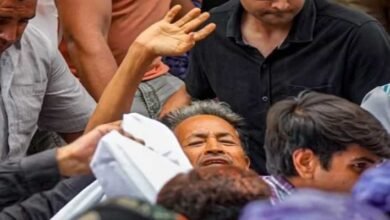
The number of people detained increased throughout the day.
The Indian Express initially reported that around 500 protesters had been detained. A later report from The New Indian Express put the police figure at more than 700, including protesters detained from Jantar Mantar and surrounding areas.
India Today later reported a police estimate of approximately 1,100 people detained across Delhi during the day’s protests, noting that some were subsequently released. The different figures appear to reflect different stages and geographical scopes of the police action rather than a single independently verified final tally.
Among those detained were AAP leaders Atishi, Saurabh Bharadwaj and Sanjeev Jha, AISA president Neha Bora, and activists and leaders from several political and student organisations.
Around 700 SFI members, according to a police source cited by The New Indian Express, were stopped near the Ashoka Road area while attempting to move towards Jantar Mantar.
Why are protesters opposing the SIR?
The demonstrations have emerged against the backdrop of a wider dispute over the Election Commission’s electoral-roll revision process.
Protesters and opposition groups have alleged that the SIR process could result in eligible voters being excluded from electoral rolls. They have also questioned reports about disagreements within the Election Commission concerning certain decisions connected with the revision exercise.
A recent Indian Express investigation reported that Election Commissioners Sukhbir Singh Sandhu and Vivek Joshi had raised objections on multiple occasions over a 10-month period concerning decisions and orders related to SIR.
The Election Commission, however, has rejected the suggestion that there was a breakdown in decision-making within the Commission.
In a statement issued in September, the ECI said that internal observations and suggestions are part of normal deliberations and that all decisions, including those concerning SIR, were approved unanimously by the full Commission.
The Commission also said that people whose names were left out during SIR, including young and first-time voters, could apply for inclusion through the continuous-updation process. It directed election officials to facilitate special enrolment drives.
Election Commission’s response
The Election Commission has maintained that SIR is intended to improve the accuracy of electoral rolls and address issues including duplicate, deceased or otherwise ineligible entries.
The Commission has also said that the final number of electors will be known only after completion of the relevant phases and final publication of electoral rolls.
On September 26, the Commission announced procedural changes for voters who receive notices because their records are unmapped or contain logical discrepancies. Under the revised process, Booth Level Officers can visit such voters’ homes to collect documents, with hearings required only in exceptional circumstances.
Two cities, one electoral debate
Friday’s events in Mumbai and Delhi marked a significant expansion of the public mobilisation around the SIR controversy.
In Mumbai, the CJP succeeded in drawing a large gathering despite the police denial of permission, while in Delhi, student organisations and political groups confronted a much heavier police presence and widespread detention.
The contrasting situations also highlighted the continuing debate over the right to political assembly, public-order restrictions and electoral transparency.
For the protesters, the issue is primarily about protecting voters’ rights and demanding accountability from the Election Commission. The Election Commission, on the other hand, maintains that its electoral-roll revision process follows the law and that decisions of the full Commission have been unanimous.
With further demonstrations announced by opposition groups in the coming days, the controversy over SIR and the functioning of the Election Commission is likely to remain a prominent national political issue.