Assam: BJP MLA Diganta Kalita Calls for Restrictions on Loudspeakers Used for Azan
The Kamalpur MLA said his objection was to the use of high-decibel loudspeakers and not to the practice of Azan itself, citing noise pollution concerns near the Assembly area.
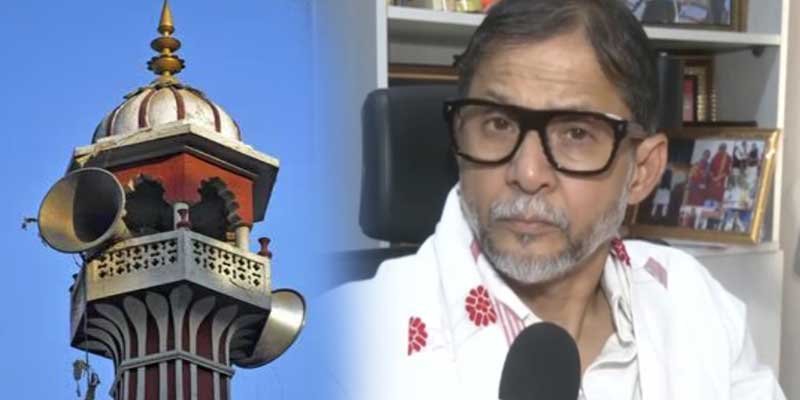
GUWAHATI- A fresh political and public debate over religious sound amplification emerged in Assam on Monday after BJP MLA Diganta Kalita called for either a ban or strict regulation on the use of high-decibel loudspeakers for Azan, the Islamic call to prayer.

Kalita, who represents the Kamalpur Assembly constituency, made the remarks while speaking to reporters in Guwahati on May 18. The legislator clarified that he was not objecting to the religious practice of Azan itself, but specifically to the use of amplified sound through loudspeakers.
“I am not against Azan, but using loudspeakers is not essential. I have been staying here at the MLA hostel for the last five years, and from morning till evening, Azan is performed five times a day using loudspeakers at a mosque near the Assembly and MLA hostel. It has disturbed us. Where is it written that the Azan has to be recited using loudspeakers?” Kalita told reporters.
Also Read- Assam Entrepreneur Dr Pakeezah Rahman Honoured Among ‘100 Iconic Women of India’

The BJP MLA said he is consulting legal experts and examining previous Supreme Court and High Court rulings related to noise pollution before formally approaching the Assam government on the matter. According to Kalita, his legal team is reviewing provisions under the Noise Pollution (Regulation and Control) Rules to prepare a proposal seeking stricter enforcement of sound regulations around sensitive institutional areas such as legislative complexes, hospitals, and schools.
Kalita’s statement is likely to intensify political discussions around religious sound practices and administrative enforcement of noise pollution laws in Assam. Similar debates over the use of loudspeakers at religious sites have surfaced in several Indian states in recent years, often drawing sharp political and community responses.
Also Read- Paper Leak Scandal Deepens as Student Deaths Raise Questions Over India’s Exam System
The Supreme Court of India has, in multiple judgments concerning noise pollution, held that the right to practice and propagate religion does not extend to creating noise pollution through electronic amplification. The court has observed that no religion mandates the use of loudspeakers or amplifiers for prayers.
Under the Noise Pollution (Regulation and Control) Rules, the use of loudspeakers and public address systems is prohibited between 10 PM and 6 AM, except under specific exemptions granted during notified occasions with prior administrative approval. The judiciary has also laid down permissible decibel limits for different categories of areas to safeguard citizens’ right to a peaceful environment under Article 21 of the Constitution.
No official response had been issued by Muslim organisations or the Assam government at the time of reporting.